



14 Jun The Best Types of Downsizer Properties
This article was originally published in 2023 and was updated in April, 2026 to reflect the latest NSW strata law reforms and the growing number of new and off-the-plan developments coming to market.
Are you looking to downsize? There is a lot to consider when you’re moving on from your beloved family home and taking the next step on your property journey. Do you purchase a smaller home or an apartment? Something as simple as that can be quite complicated — not only do you need to love your new home, but you also need to understand the ownership structure that comes with it. That is, whether you become part of a Strata Scheme with a unit or a townhouse, or maintain your independence with a Torrens Title property, such as a freestanding house or semi-detached home.
Strata ownership has also changed significantly in recent years. NSW has introduced a major package of reforms through 2025 and into 2026 that bring greater transparency and stronger protections for buyers — so if you’ve been hesitant about apartment living in the past, the landscape is shifting in your favour.
To help you on your downsizing property journey, we share the positives and negatives of the different types of property ownership — Torrens, Strata and Company Title — so that you can decide the right choice for your next purchase.
1. Torrens Title
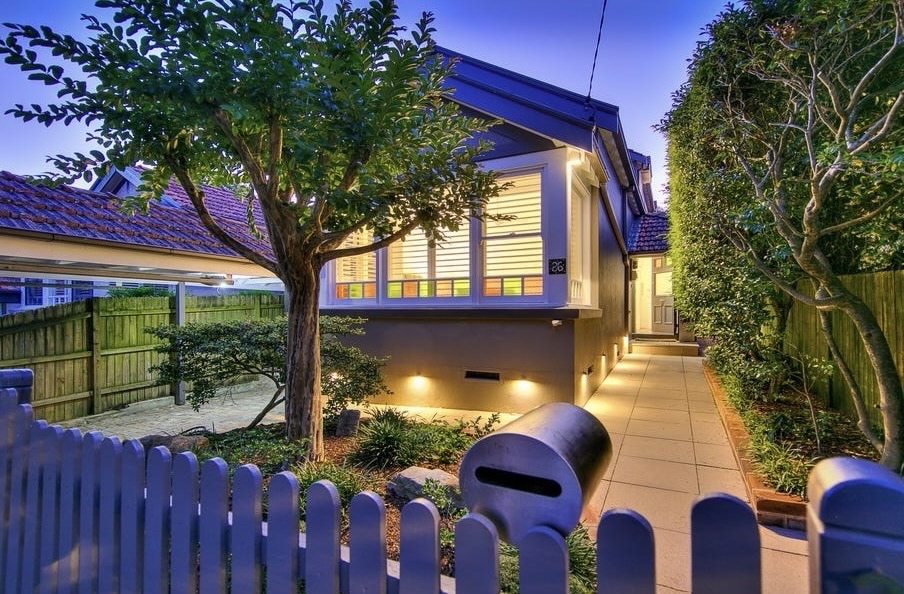
The Torrens Title was first introduced in NSW in 1863. It is the primary register for land held in NSW and records the ownership and transfer of land. Ownership under this title means that the person recorded on the register is the sole owner of the land and building on it. Also referred to as freehold, one of the greatest advantages of this title is that it is a single document guaranteed by the NSW Government. Types of properties under this title are freestanding homes and semi-detached homes.
A. Semi-Detached Homes & Free-Standing Homes
Semi-detached homes are essentially two dwellings that share a common wall. Older semi-detached homes tend to be double brick so there is little noise transmission through the common wall. Newer built semi-detached homes are not necessarily double brick so the noise through the common wall needs to be checked. Semis are popular due to their lower entry price point than a freestanding home, low maintenance garden while still having outdoor space, the ability to have pets and their Torrens Title. Freestanding homes offer all the benefits of independence and privacy, however they do require more maintenance and typically come with a higher entry price point.
Positives
- Freedom to renovate
- Neighbours not so close
- No strata fees
- More outdoor space/garden
- Potential to add value (additional level, skylights, attic storage)
Negatives
- Semis have a neighbour on adjoining wall (older semis have double brick and are solid so lower noise transmission)
- Responsible for all maintenance
- No Lift
2. Strata Title
Strata Title is a type of ownership structure for apartment buildings and townhouses. Owning an apartment or a townhouse under this scheme, provides you with an individually owned lot and collectively owned common property.
A. Apartments
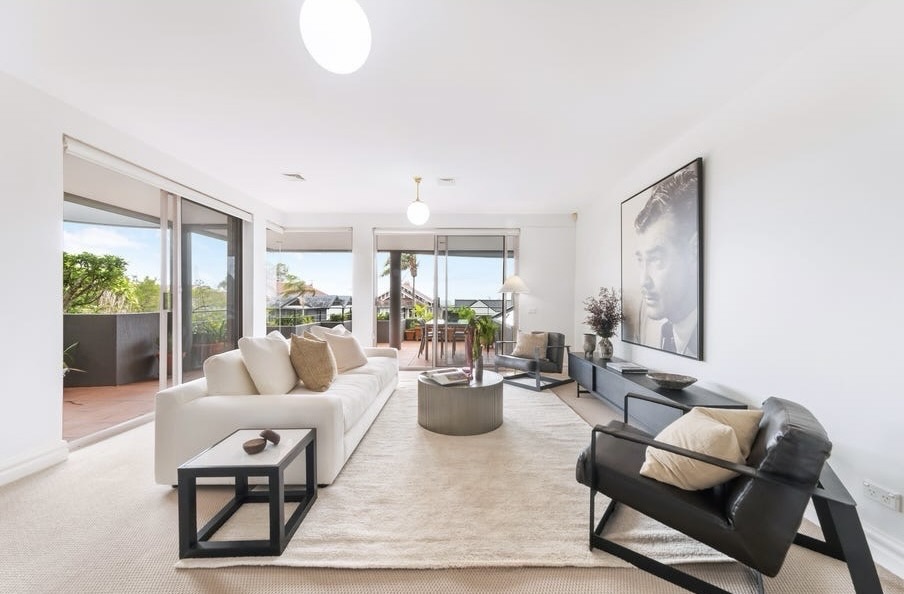
Apartments are a popular choice particularly for downsizers due to their low maintenance appeal and lock-up-and-go nature, their proximity to amenities, lifestyle and transportation.
One important consideration in 2026 is the cost of strata levies, which have risen in many buildings due to a significant increase in building insurance premiums across NSW. Climate-related claims and building defect issues have driven insurance costs up sharply in recent years, meaning levies — and the risk of special levies — deserve careful scrutiny before you purchase. Always request a current strata report and review the capital works fund plan before committing.
The good news is that buying into strata has become considerably more transparent under new NSW legislation that took effect in April 2026. Strata Information Certificates (the Section 184 certificate you receive during due diligence) must now disclose embedded networks — the privately owned utility arrangements within a building that have historically caught buyers off guard after settlement. Capital works fund plans must also now follow a standardised format, making it much easier to compare the financial health of different buildings and assess whether levies are likely to rise.
Positives
- Lock up and go
- Potential views
- More units more choice
- Close to transport networks
- Security
- Building maintenance taken care of by strata
- Lifts or can be easy level accesss
- Sense of community
- Building may offer ammenities (gym, pool)
- Greater transparency for buyers under 2026 strata reforms
Negatives
- Multiple neighbours/noise
- Rising strata levies — insurance costs have increased significantly across NSW
- Potential special levies
- Permission required by strata to renovate
- Required to follow strata bylaws
- Potential Air B&B renters in building
- Owner occupiers to renters ratio
- May not be suitable for larger dogs
B. Town Houses
Townhouses are good a good option for downsizers wanting a home but on a smaller scale. This option is good for those wanting a private garden and undercover parking (often with internal access).
Positives
- Price point- a lot of amenity for moderate price
- Garden
- Almost always has parking with internal access
- Larger then an apartment
- Lower density than apartments
Negatives
- Reduced capital gain potential due to smaller buyer pool
- Often two levels with bedrooms upstairs
- No lift
- Strata fees
- Older townhouses lack uniqueness – often built in 1980’s
A note on new and off-the-plan apartments and townhouses
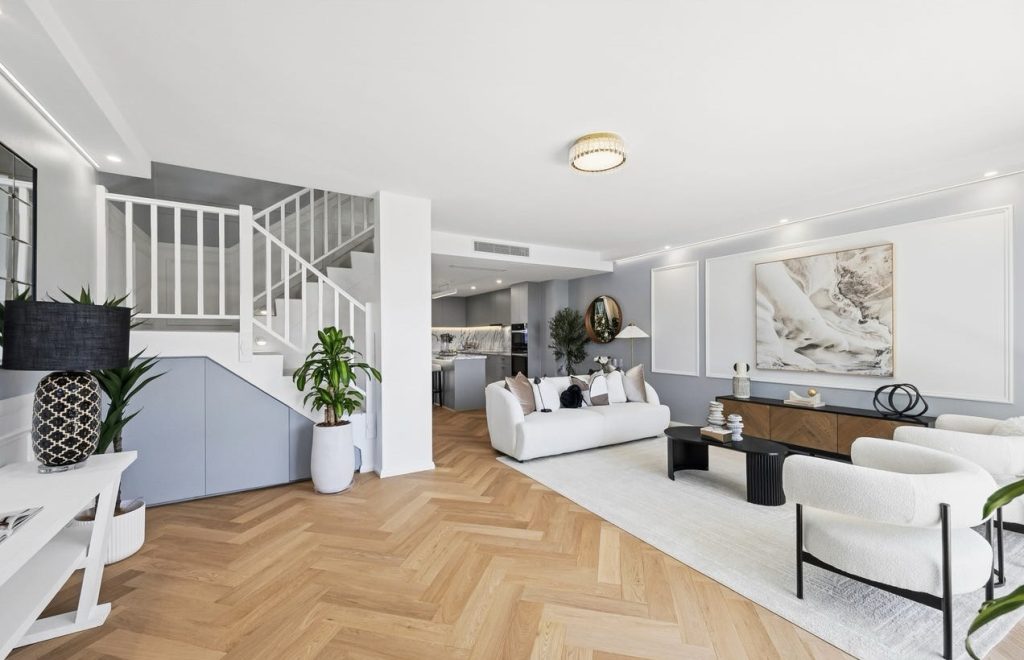
The Sydney market is currently seeing a significant wave of new apartment and townhouse developments, and for downsizers, these can be an appealing option — brand new finishes, modern layouts, and no immediate maintenance concerns. However, buying into a new or off-the-plan development comes with a distinct set of considerations that differ entirely from purchasing into an established building with an existing strata history.
When there is no existing strata to review, buyers are largely relying on their own due diligence. There is no track record of how the building is managed, no history of levies, and no pattern of maintenance issues to assess. The Section 184 certificate that provides so much useful information for established buildings simply doesn’t exist yet.
NSW builders warranty insurance (Home Building Compensation Fund cover) provides some protection — but it only responds if the builder becomes insolvent, dies, or disappears. If your builder is still trading and disputes your defect claim, pursuing rectification can be a costly and drawn-out process. Defects in new strata buildings have become increasingly common, and some owners have faced significant financial and emotional strain navigating the resolution process.
This doesn’t mean new developments should be avoided — many are excellent. But buyers should go in with eyes open, and with the right professional support around them.
Things to investigate when buying new or off-the-plan:
- The builder’s track record and whether they have a history of defect claims or disputes
- The developer’s reputation and whether they have delivered comparable projects
- The independent certifier appointed for the building
- Whether the initial maintenance schedule and levy estimates have been independently certified (required under new 2026 legislation for new multi-storey developments)
- Legal advice on your contract, particularly around sunset clauses and variations
3. Company Title
The company title structure is where you purchase shares in a building, which gives you exclusive use and ownership of your unit and shared use of the common property. Under this ownership structure, the company owns the land and residents are shareholders. This is the system universally used prior to 1961, and most buildings have now converted to strata title. For properties that have not been converted to strata title it should be noted that there is a significant expense in transferring titles.
It is worth noting that conversion to strata now also unlocks the enhanced protections and transparency that come with the 2025–2026 NSW strata reforms, making the case for conversion stronger than ever for buildings still operating under company title.
Positives
- Suitable for owner occupiers as most cannot be rented out, or only for a limited period of time
- For owners same positives and negatives as strata title
- Opportunity to convert to strata title which adds value — and now also unlocks improved regulatory protections
- Less expensive to purchase than strata title
Negatives
- You only own a share in the building not the actual unit.
- The price growth isn’t as much as with strata title, due to limited buyer pool
- Tougher restrictions from lending institutions make finance harder to get and often requires a larger deposit.
So, Where Do I Start?
Once you’ve decided on the type of property that suits your next chapter, the process questions begin. Here are a few worth thinking through early.
Sell first or buy first?
This depends entirely on your individual financial situation, and it’s worth having a conversation with your financial adviser before you begin your search. If you have the financial comfort to carry two properties for a period, buying first is generally less stressful – you can take your time, find the right property, and sell your family home without pressure. If you need certainty around how much you have to spend before committing to a purchase, then selling first is the right move. Neither approach is wrong; it simply comes down to your individual circumstances.
Do I need a buyers’ agent?
Navigating the property market isn’t straightforward, particularly as a significant number of properties sell off-market – meaning they never appear on the major portals and many buyers simply never know they existed. Access to these opportunities can make a material difference to both what you find and what you pay.
If you’re looking to downsize into an apartment or townhouse, there is also an additional layer of due diligence involved, from reading strata reports and assessing the financial health of a building, to understanding the very different risks that come with new and off-the-plan purchases. Having someone experienced in your corner who knows what to look for and what to walk away from can save considerable time, money and stress.
What should I ask when purchasing a new or established apartment?
See our accompanying article for a full guide to the questions worth asking and the things worth looking for when you’re considering buying into a strata building.
Feature Image: 📷 realestate.com.au – 6A Parriwi Road, Mosman, NSW 2088 sold in September 2025 for $4.5m by David Grant – De Brennan Property